Fr. Alex and a story of pain and hope
In my younger days, there was a core of us (maybe 7 to 10) that stayed together as classmates from elementary to high school. Father Alex Galo, Jr. was one of those that I consider as a sticky bunch, and the two of us happened to be the "stickiest" of them all. By that I mean getting thrown out of class together physically for misbehaving.
Growing up, we dreamed with our eyes open. One wanted to be pilot. Another one a doctor. But the bunch did not see the day when one of them would become a priest. Fr. Alex said he wanted to be PC (Philippine Constabulary) - all in the spirit of banter, of course. Ours was a generation that tried to understand what "Martial Law" was all about. PCs then were like celebrities fit to be idolized and law and order were romanticized. This was the mid-70s.
Soon the bunch dissolved into a whimper, like a pond that lost its ripple. Time scattered us like leaves in the wind. In the chase of our respective dreams, we lost touch and stories were mostly unshared. Meanwhile, the world around us unraveled. The 1980s brought violence, loss, and upheaval — close to home. The atrocities perpetrated by both state troopers and the rebels they spawned claimed casualties among relatives and friends. The tension between state power and rebellion shaped our lives, leaving scars and stories we hadn’t told. Before the likes of Fr. Alex became the man that he was, the land of our birth (Eastern Samar, Philippines) felt its descent from pockets of fear to bowls of suffering.
Martial Law cast long shadows that need to be tightly hinged to memory. Out of this backdrop was born "The Miracles of Quiapo." The story moves from the shadows of Samar to the crossroads of Quiapo, where pain and hope collide. It finds relevance in how government wields its power in the service of a few, at the expense of mostly impoverished many. For decades the saga had been doodled in my head until it finally saw print sometime in 2022. The novel has two highly visible characters: one, a man in uniform and the other, a man of the cloth. The symbolism was deliberate: to mimic the world of Fr. Alex who hinted a desire to be a soldier - the protector of peace -- and ended being a man of peace.
When Fr. Alex passed away on 15 January 2025 (just days before he turned 67, and also the day after I turned 65), I felt the novel as a tribute to his memory needed retouching. Like the man himself — succinct, clear, and purposeful — I revised the storytelling, cutting it nearly in half. Less verbiage, I hope, contributes to sharper meaning.
The revised edition is now free to download. If you have time, I invite you to read it. Here is the download link -->> https://www.aberia.online/miracles
This one’s for Fr. Alex. Saludo, a childhood buddy to me, a friend in the Lord to all.
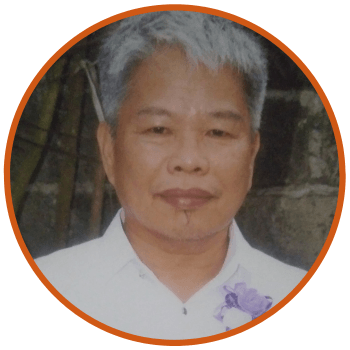
Ingming Aberia
Aparcero


Ingming Aberia blog joins the dreamers and doers who plant the seeds of hope for a better world. It lobbies for social leveling and respect for human rights, promoting each person's God-given dignity and birthrights.
It does not intend to offend anyone, but where there is inequity, it shall seek a position where it can inspire people to shake up the status quo.
Newsletter
Subscribe now to get daily updates.
Created with ©systeme.io